recent posts
Tags cloud
NIST’s New Supply Chain Traceability Framework: What Defense and Federal Procurement Teams Should Know in 2026
NIST’s New Supply Chain Traceability Framework: What Defense and Federal Procurement Teams Should Know in 2026
A supplier delivers an electronic component that matches the requested part number. The packaging appears correct, the product looks genuine, and the shipment arrives on schedule.
But can the buyer verify where that component originated, who manufactured it, and whether the supporting documentation can be trusted?
For organizations purchasing technology and specialized components for defense, aerospace, federal, and scientific programs, these questions are becoming increasingly important.
Modern supply chains often involve multiple manufacturers, distributors, subcontractors, and international logistics providers. As products move through these networks, maintaining accurate information about their origins and history can become difficult.
On September 9, 2026, the National Institute of Standards and Technology (NIST) announced the final publication of NIST Internal Report 8536, Supply Chain Traceability Principles: A Manufacturing Meta Framework.
The publication introduces a framework designed to improve how organizations connect, exchange, and verify product traceability information across complex manufacturing supply chains.
For procurement professionals, the development reinforces an important principle:
Knowing what you are purchasing is essential. Knowing where it came from, and having reliable information to support that history, can be just as important.
What Is Supply Chain Traceability?
Supply chain traceability is the ability to follow a product, component, or material through relevant stages of its manufacturing and distribution history.
In practical terms, traceability helps organizations answer questions such as:
- Who manufactured the original component?
- Where was the component produced?
- Which suppliers or distributors handled the product?
- Is the supplied part consistent with the manufacturer’s specifications?
- Can the available documentation support the product’s stated origin?
- Are there gaps in the supply chain that could introduce counterfeit or compliance risks?
For ordinary commercial purchases, some of these questions may not require extensive investigation.
For mission critical programs, however, incomplete traceability can create significant problems.
A specialized electronic component may become part of a satellite, communications system, aircraft, research instrument, or defense platform expected to operate reliably for years.
The consequences of accepting an incorrect or improperly documented component may extend well beyond the purchase price.
This is why traceability should be considered an important part of responsible procurement rather than simply an administrative requirement.
What Changed in September 2026?
NIST’s National Cybersecurity Center of Excellence released the finalized version of NIST IR 8536 on September 9, 2026.
The publication addresses a longstanding difficulty in global manufacturing: organizations often rely on different systems, documentation practices, and industry standards to track products through their supply chains.
Information available to one supplier may not be easily accessible or verifiable by another.
As a result, organizations can struggle to establish a reliable product history when materials and components move between different manufacturers, industries, and countries.
NIST’s new framework proposes a common approach for organizing and connecting traceability information.
The goal is to help organizations verify product provenance while allowing suppliers to retain appropriate control over sensitive commercial information.
Importantly, this framework is designed to work with existing industry standards rather than requiring every organization to replace its current processes.
Readers can review the official publication through the NIST Supply Chain Traceability project.
Does the New Framework Create Mandatory Procurement Requirements?
Not by itself.
NIST IR 8536 provides technical principles and guidance for developing interoperable traceability solutions. Its publication does not automatically establish a new universal certification requirement for suppliers or mandate that all federal contractors adopt a particular system.
Specific obligations continue to depend on applicable laws, contract clauses, agency requirements, industry standards, and customer purchasing specifications.
However, the framework provides an indication of where supply chain management practices may continue to develop.
Buyers and suppliers increasingly need practical ways to establish confidence in the information accompanying the products they purchase.
Why Traceability Matters for Defense and Aerospace Procurement
Defense and aerospace procurement presents challenges that are not always encountered in conventional commercial purchasing.
Products may have strict technical requirements, extended service lives, specialized quality documentation, and limited approved sourcing options.
Several areas deserve particular attention.
1. Counterfeit Electronic Components
Counterfeit components remain a serious concern in complex electronics supply chains.
A product may carry the correct manufacturer markings while having an unknown or misrepresented history.
Examples include recovered components sold as new, altered date codes, incorrect manufacturer identification, and parts supplied with unreliable documentation.
These risks can become more difficult to manage when legitimate manufacturing sources disappear.
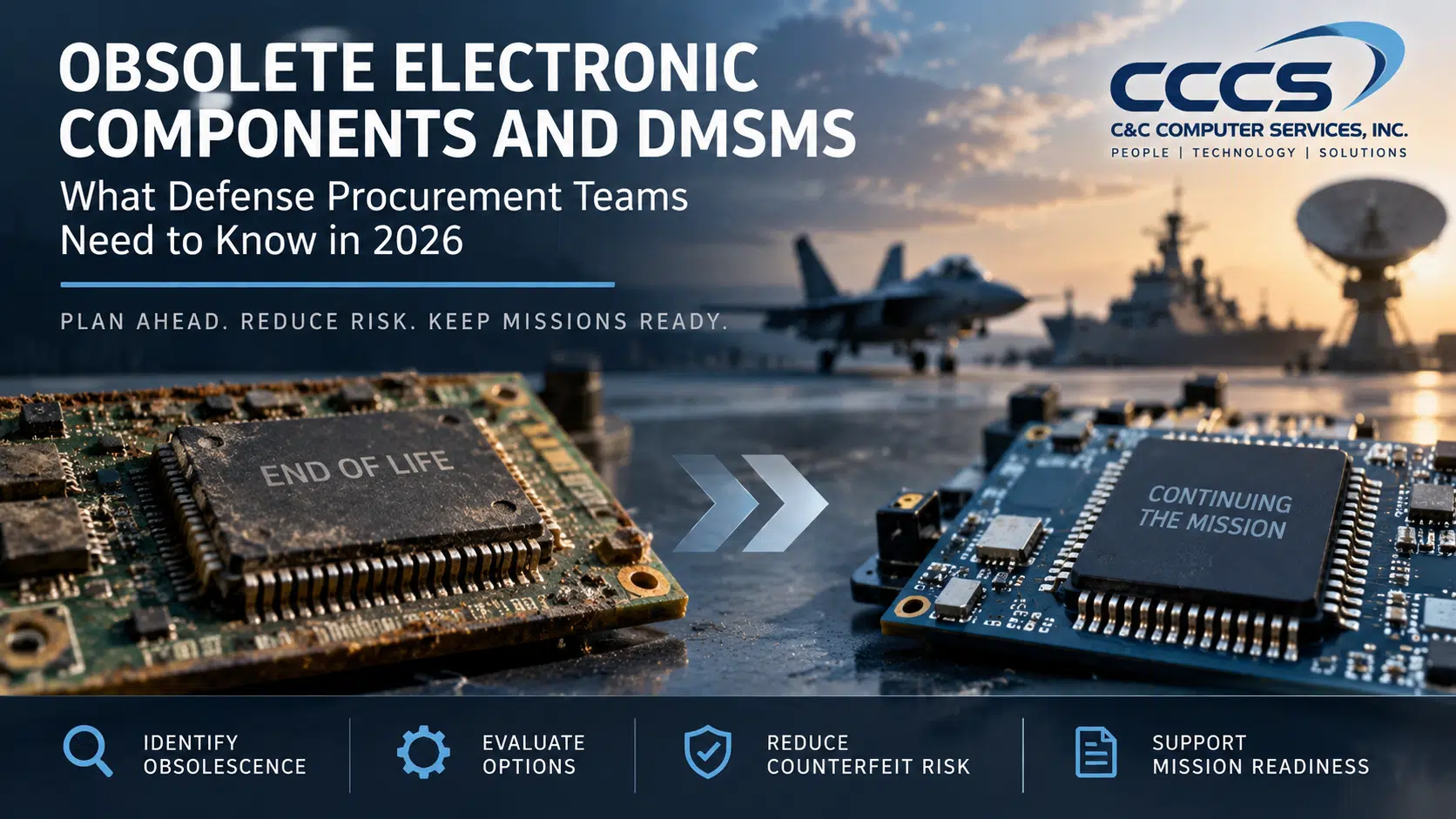
As CCCS discussed in our article on obsolete electronic components and DMSMS, product obsolescence can force buyers to consider alternative sourcing channels.
When that happens, the ability to establish a reliable component history becomes especially important.
Traceability cannot eliminate counterfeit risk on its own, but stronger documentation and verification practices can help organizations identify suspicious sourcing conditions before a component enters a critical system.
2. Country of Origin and Supplier Documentation
For federal and defense procurement, product origin can influence purchasing decisions and compliance evaluations.
Depending on the contract, buyers may need information about manufacturing locations, country of origin, applicable trade restrictions, or domestic sourcing requirements.
These are related but distinct considerations.
A supplier’s business address does not necessarily establish where an item was manufactured. Likewise, identifying a manufacturer’s headquarters does not automatically determine the legal country of origin of a particular product.
Procurement teams should verify the specific information required under the applicable contract rather than making assumptions based on a company’s name or location.
Reliable traceability practices can help support these investigations by improving the availability and consistency of product information.
3. Long Term Product Support
Defense systems frequently remain operational long after their original commercial components are discontinued.
A replacement product may appear technically compatible while incorporating different materials, manufacturing processes, or electrical characteristics.
These differences may matter when a system must operate under demanding environmental or performance conditions.
For this reason, procurement teams should not evaluate a proposed replacement solely on dimensions, price, or apparent functional compatibility.
Manufacturer documentation, engineering approval, product history, and qualification requirements may all be relevant.
Better traceability can support these decisions by helping organizations understand what was actually supplied.
4. Supply Chain Disruptions
Manufacturing interruptions, supplier changes, transportation delays, and geopolitical developments can affect product availability with little warning.
When a critical manufacturer becomes unavailable, procurement teams may need to identify other legitimate sources.
The quality of existing supplier information can influence how quickly an organization evaluates those alternatives.
Organizations that maintain accurate product records and sourcing documentation are generally better positioned to investigate disruptions and determine appropriate responses.
What NIST’s Framework Means for Procurement Teams
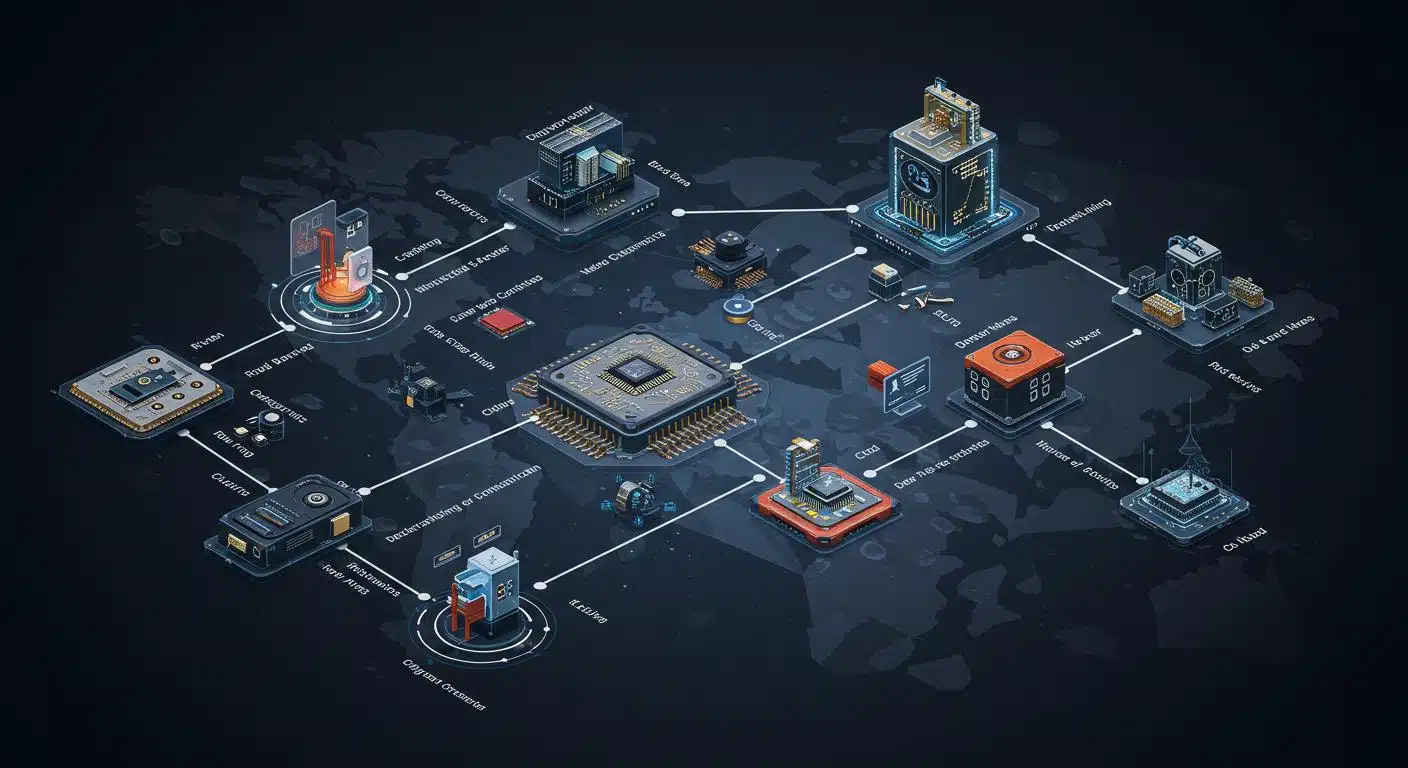
One of the most useful aspects of NIST IR 8536 is its recognition that supply chain information does not exist in a single system.
Manufacturers, distributors, logistics providers, and customers may all maintain different records.
The challenge is connecting relevant information in a trustworthy and practical manner.
NIST’s approach establishes principles for linking traceability data across different systems while supporting verification and appropriate information protection.
For purchasing organizations, the publication offers several lessons.
Product identification should be precise. Manufacturer names, part numbers, revisions, and other applicable identifiers should be accurately recorded.
Supplier information should be verifiable. Procurement teams should understand the source of critical products and determine what supporting documentation is available.
Documentation should remain associated with the product. Certificates, manufacturing information, and other records are most useful when they can be connected to the appropriate order, lot, batch, or individual component, as applicable.
Traceability should extend beyond the initial purchase. Records may become important years later when an organization needs to investigate a component failure, verify a replacement, or respond to a quality concern.
Information sharing must be controlled. Improving visibility does not require unrestricted disclosure of proprietary manufacturing information.
These principles are particularly relevant to organizations purchasing complex technology through multiple suppliers.
Five Practical Steps Buyers Can Take Today
Procurement teams do not need to adopt an entirely new technology platform to begin improving their traceability practices.
Several practical measures can strengthen existing purchasing processes.
Step 1: Verify the Manufacturer and Part Number
Confirm that the requested product is correctly identified before placing an order.
This includes checking applicable revisions, configurations, technical specifications, and manufacturer documentation.
A similar part number does not always represent an interchangeable product.
Step 2: Evaluate the Supply Source
Determine whether the product is being purchased through the manufacturer, an authorized distribution channel, or another supplier.
For specialized or obsolete components, identify any additional risks associated with alternative sourcing.
Different sourcing channels may require different levels of verification.
Step 3: Define Documentation Requirements Before Ordering
Documentation expectations should be established before an order is accepted whenever possible.
Depending on the requirement, documentation may include certificates of conformance, manufacturer records, test reports, or other specified quality information.
Not every purchase requires the same documentation.
The important consideration is ensuring that the supplier understands what must be provided.
Step 4: Review Contract and Quality Requirements
Government and prime contractor purchases may include specialized quality clauses, inspection requirements, traceability expectations, or sourcing restrictions.
These requirements should be reviewed alongside the technical specification.
Documentation that is adequate for a commercial purchase may not satisfy the requirements of a particular defense contract.
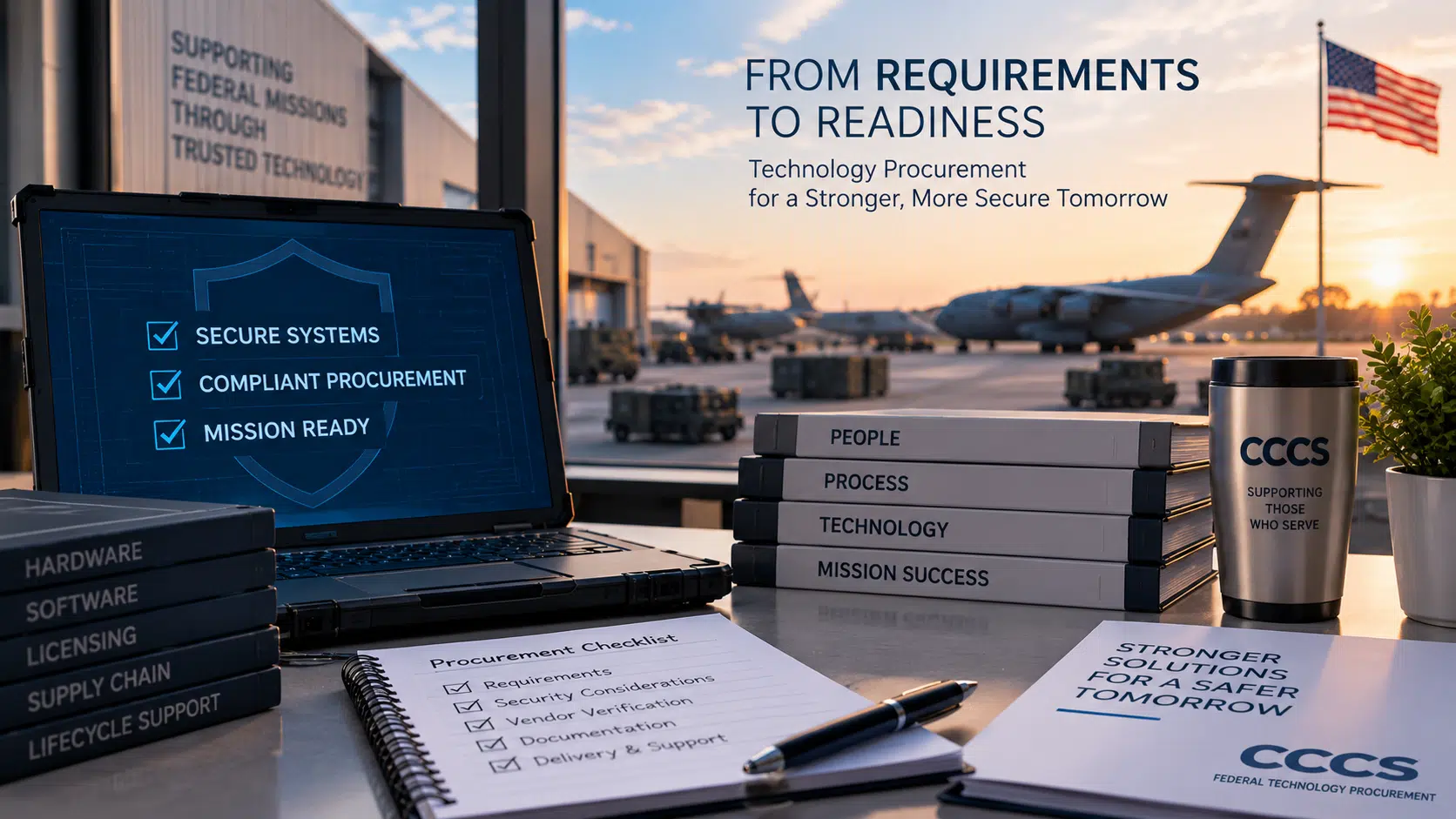
CCCS provides additional considerations in our article, 7 Things Procurement Teams Should Verify Before Buying Mission Critical IT Hardware.
Step 5: Maintain Accurate Procurement Records
Purchase orders, supplier communications, product identification, receiving documentation, and applicable quality records should be maintained according to organizational and contractual requirements.
These records can become essential when investigating delivery discrepancies, product failures, recalls, or future replacement needs.
For organizations managing large numbers of specialized components, consistent documentation practices can significantly reduce the effort required to investigate problems later.
How Supply Chain Traceability Could Evolve
NIST’s publication reflects a broader effort to improve trust and visibility across increasingly interconnected manufacturing networks.
The framework explores how information can be linked across different organizations without requiring every participant to use identical systems.
NIST is also developing a reference implementation intended to demonstrate practical methods for exchanging and evaluating traceability information.
These developments may eventually support more efficient verification processes, improved interoperability, and stronger supply chain risk management.
However, technical frameworks alone cannot establish the authenticity or suitability of every product.
The quality of the underlying data, the credibility of the supplier, and the accuracy of supporting documentation remain essential.
Digital traceability is most valuable when it reinforces sound procurement and quality assurance practices.
The Role of Specialized Procurement Partners
As technology supply chains grow more complex, organizations need more than access to product catalogs.
They need procurement partners who understand the importance of accurate specifications, reliable sourcing, documentation, and communication throughout the purchasing process.
At C&C Computer Services, Inc. (CCCS), our work includes sourcing enterprise hardware, software, specialized electronic components, industrial supplies, and difficult to obtain products for government agencies, prime contractors, and technical organizations.
Our approach emphasizes understanding the customer’s actual requirement before identifying suitable procurement options.
That includes coordinating technical specifications, supplier availability, documentation expectations, and delivery requirements.
For customers purchasing mission critical products, these considerations can be just as important as price.
Learn more about our procurement and technical sourcing capabilities.
Frequently Asked Questions About Supply Chain Traceability
What is supply chain traceability?
Supply chain traceability is the ability to identify and follow relevant information about a product, component, or material throughout its manufacturing and distribution history.
What is NIST IR 8536?
NIST IR 8536 is a publication titled Supply Chain Traceability Principles: A Manufacturing Meta Framework. Finalized in September 2026, it describes principles for improving the organization, exchange, and verification of traceability information across manufacturing supply chains.
Is NIST IR 8536 mandatory for defense contractors?
The publication itself does not establish a universal mandatory requirement for defense contractors. Organizations must evaluate their actual contractual, regulatory, and industry obligations separately.
Why is component traceability important in defense procurement?
Traceability helps organizations investigate product origin, evaluate supplier information, identify potential counterfeit exposure, support quality requirements, and maintain records for long term system support.
Can supply chain traceability eliminate counterfeit components?
No. Traceability can improve visibility and support verification, but it does not replace supplier qualification, appropriate inspection, testing, or other required quality assurance activities.
Conclusion: Better Information Supports Better Procurement
The release of NIST IR 8536 is an important development in the continuing effort to strengthen manufacturing supply chains.
It recognizes a challenge familiar to procurement professionals: products move through increasingly complex networks, but the information required to establish confidence in those products does not always move with them.
For federal agencies, defense contractors, aerospace manufacturers, and scientific organizations, this challenge has practical consequences.
A correct part number matters.
A reliable supplier matters.
Accurate documentation matters.
And the ability to verify product history can be essential when something goes wrong.
Organizations that strengthen their purchasing records, supplier verification practices, and documentation procedures today will be better prepared for evolving supply chain expectations.
At CCCS, we understand that successful procurement involves more than locating a product. It requires careful coordination between customer requirements, supplier capabilities, product specifications, and delivery commitments.
Need assistance with specialized electronics, enterprise technology, or mission critical procurement?
Contact C&C Computer Services or call 321.951.0289 to discuss your requirements with our team.
Our goal is to help you obtain the right products, from appropriate sources, with the documentation your program requires.